I Went to Gstaad to Talk Money
Written by
Victoria Voigt
Content
Jan 26, 2026
I Went to Gstaad to Talk Money
Written by
Victoria Voigt
After The World Economic Forum in Davos, many of the "behind the scenes" elites didn’t immediately leave Switzerland to "get back to work". Some stayed behind, not just for the pristine mountain air, and the greasy gourment delights, but to money talk without all world's gaze.
And for those truly interested in private conversations apres-Davos, awaits the old-time Gstaad.
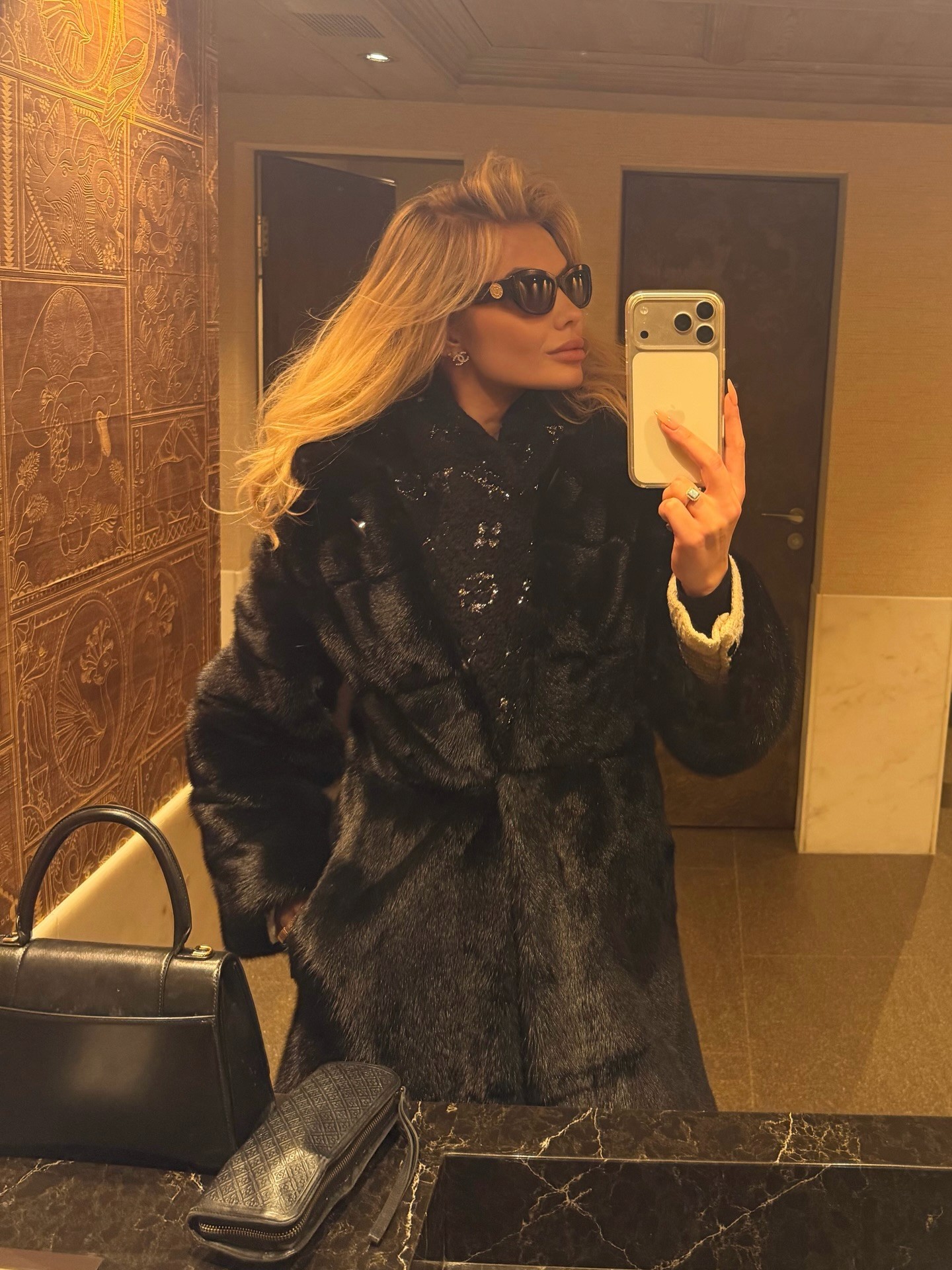
So I wore my best fur, real because it's still, a real status symbol, some vintage Chanel, Louis Vuitton accessories and blew my light blonde hair up - to blend in. Gentlemen prefer blondes, they say.
Switzerland: The History of Hiding
No, I don't mean the famous Swiss bunkers. But quite literally asset shelters.
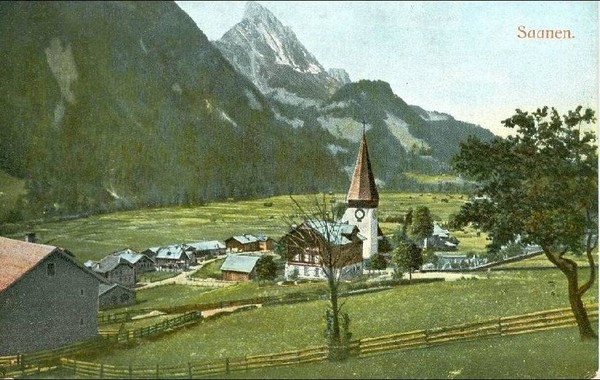
Originally a modest farming village in the Saanenland reliant on timber, cheese and cattle, it was connected to the wider world only after the electrified mountain railway opened in 1905, dramatically improving access and kick‑starting tourism.
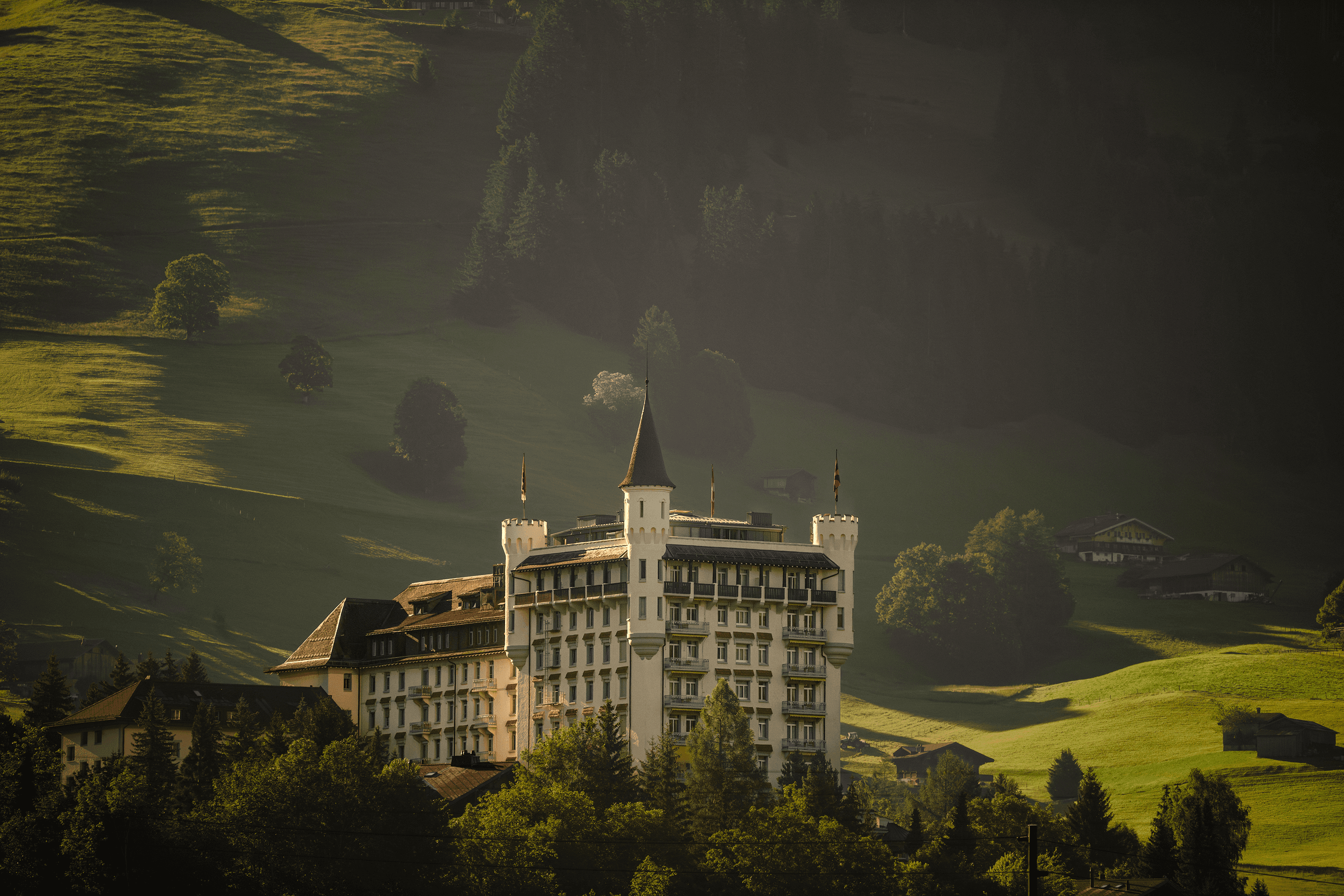
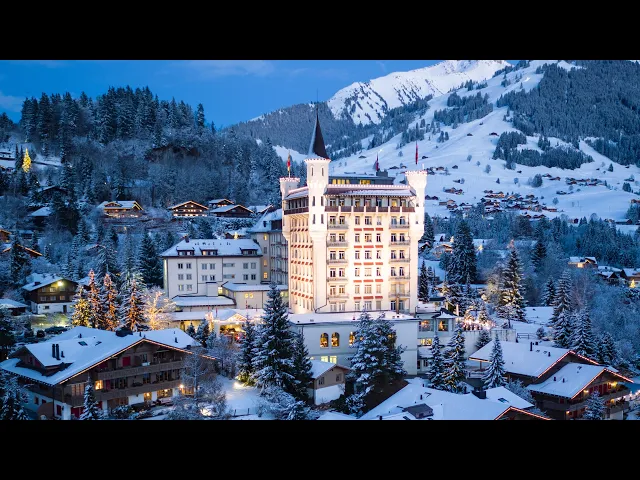
The real turning point came with hospitality. In 1913, visionary locals opened the Gstaad Palace, establishing a chalet‑style grand hotel that would become legendary among aristocrats and global elites.
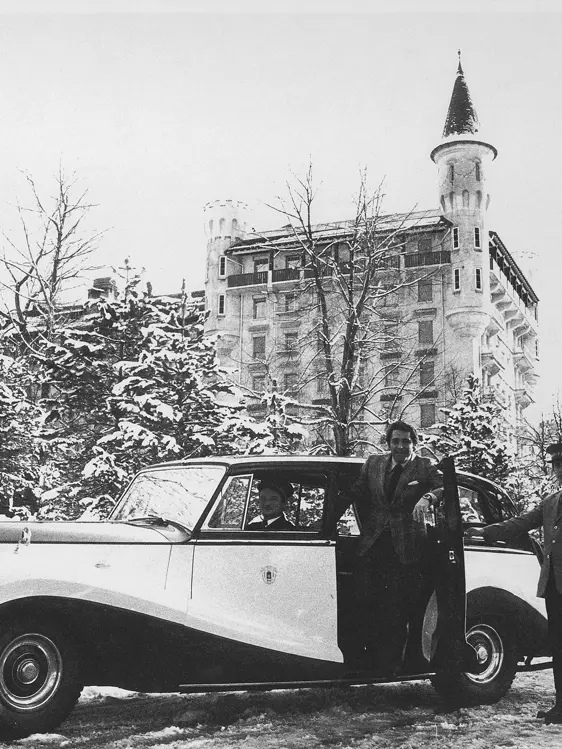
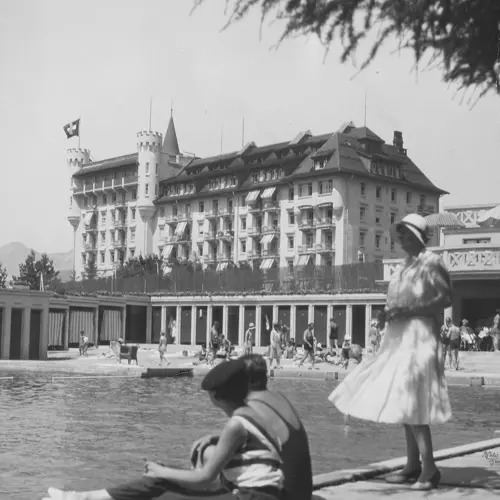
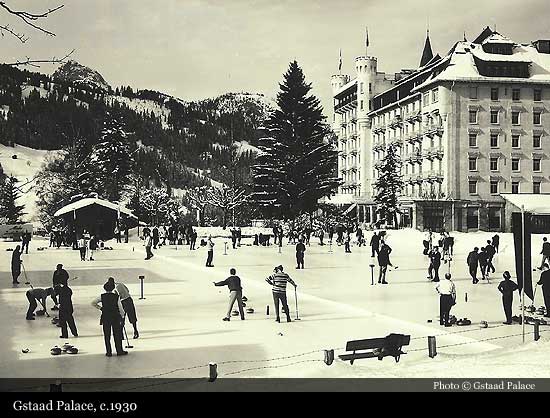
Soon after, prestigious boarding schools most notably the winter campus of the most expensive school in the world - Institut Le Rosey brought affluent families to the village in the 1910s and 1920s, embedding elite social networks into the fabric of Gstaad long before the rise of mass luxury tourism.
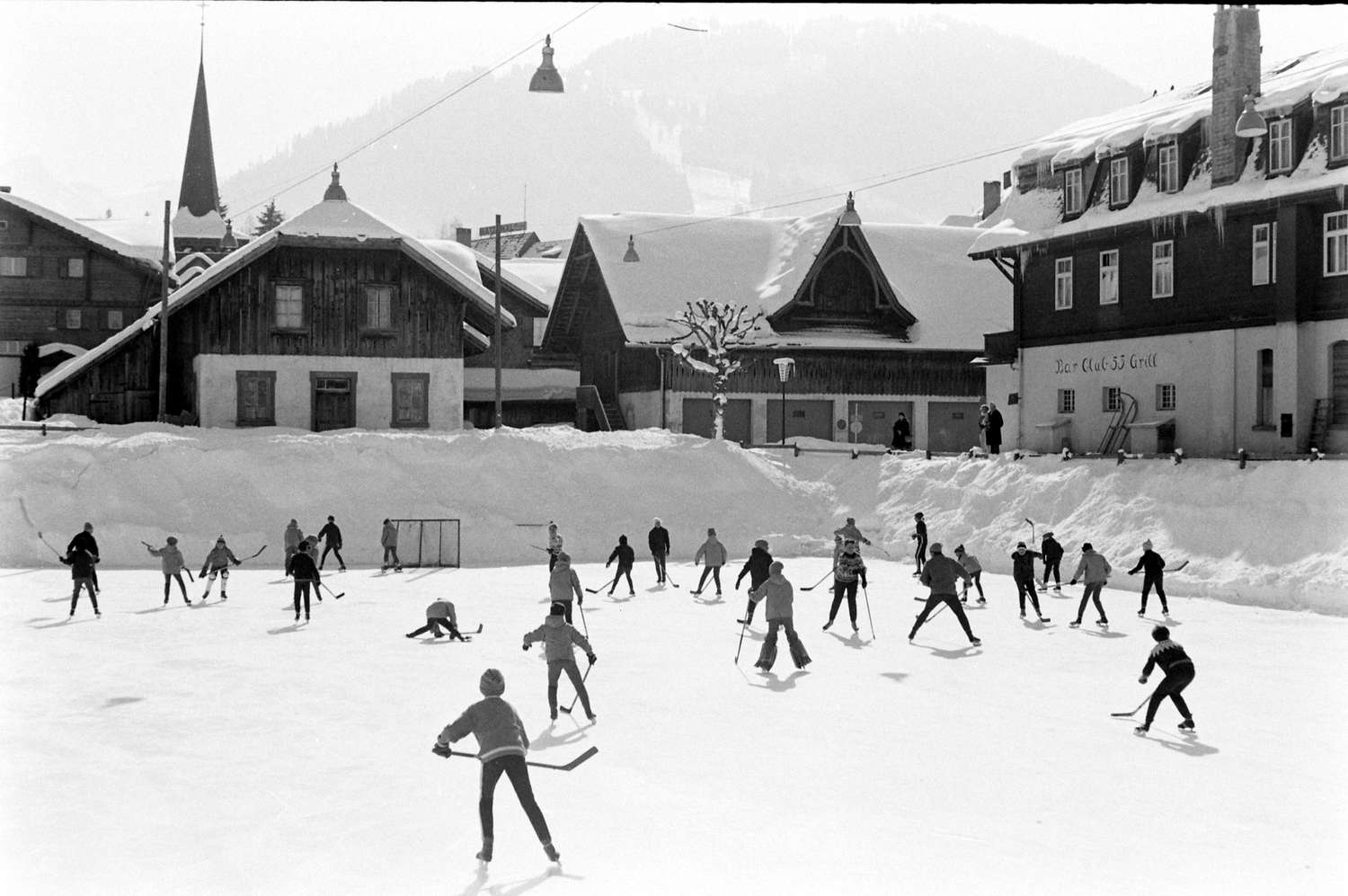
Unlike Zurich or Geneva centers of banking and finance Gstaad was never a financial hub in its own right. There were no major private banks on every corner, no trading floors, no "Lunajets" offices.
Instead, it functioned as a residential extension of Switzerland’s private wealth ecosystem: families who managed assets through Swiss banks, trusts, and family offices in other cities would retreat here to live, socialize, and preserve capital quietly.
Even during World War II, the Gstaad Palace itself housed valuables in its cellar at one point safeguarding money and other assets with the assistance of the Swiss Bank Corporation (now UBS).
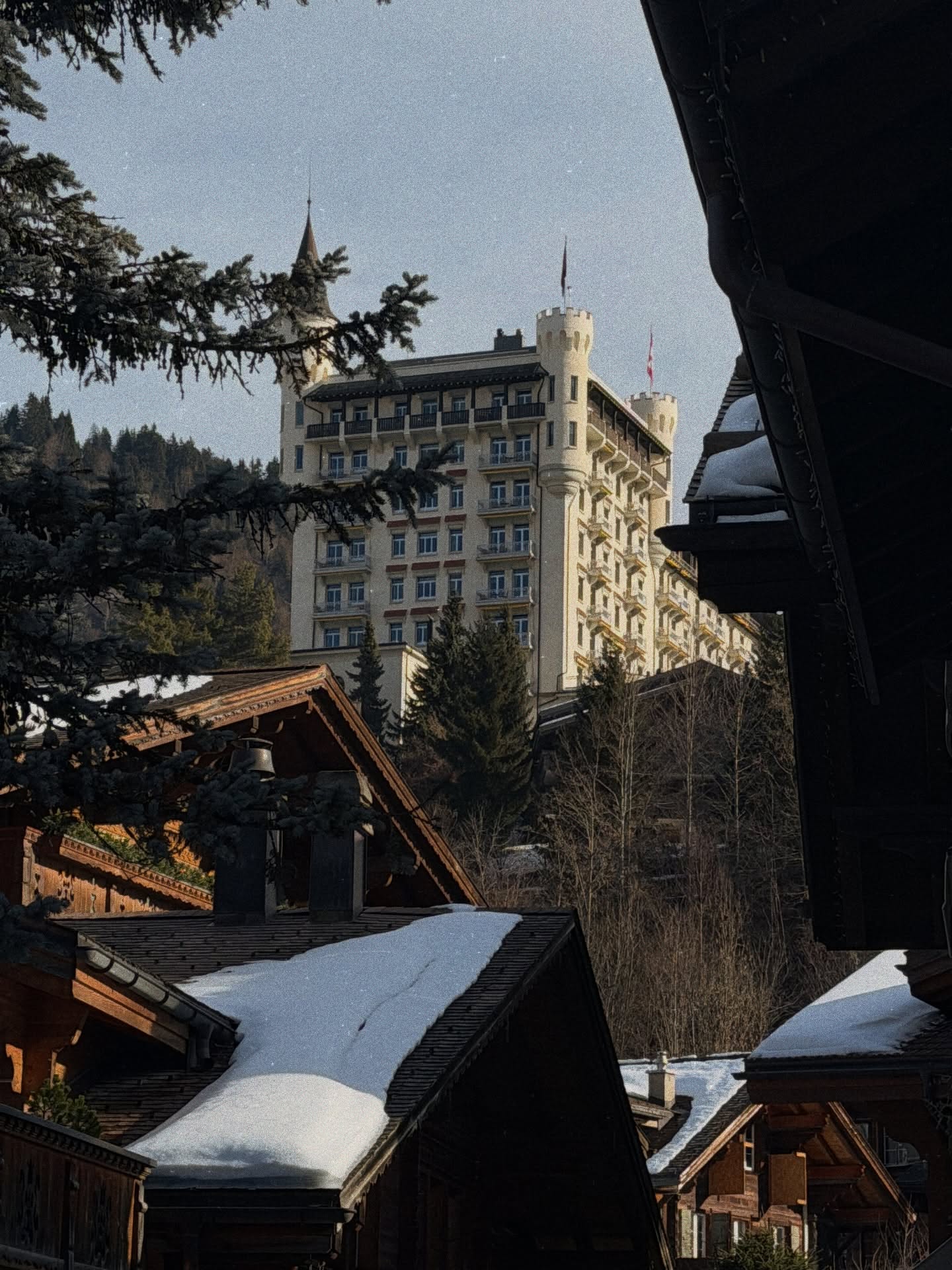
By the 1950s and 1960s, Gstaad’s discrete charm had become legendary. It attracted European aristocracy, industrial dynasties, and international elites - names as diverse as royalty, Hollywood stars and grandees of industry who used their chalets season after season.
That Golden era set the pattern: a slow‑growing enclave where wealth was lived, not marketed. Something hardly imaginable in today's uber-capitalistic world.
Why Gstaad?
So why Gstaad? Its draw isn’t just the scenery. It’s the combination of remoteness and exclusivity. Very few people live there permanently. Fewer still can afford its chalets, its private ski lifts, or its intimate five-star lodges.
But as the world gets richer and thus more open, this town might one day become another Venice. For one day only because it can be so "boring" for the outsiders. It's a smart design, rich did it to protect their intimacy.
(Not to mention - some nosy journalists, like me, who will come from time to time and make ironic points).
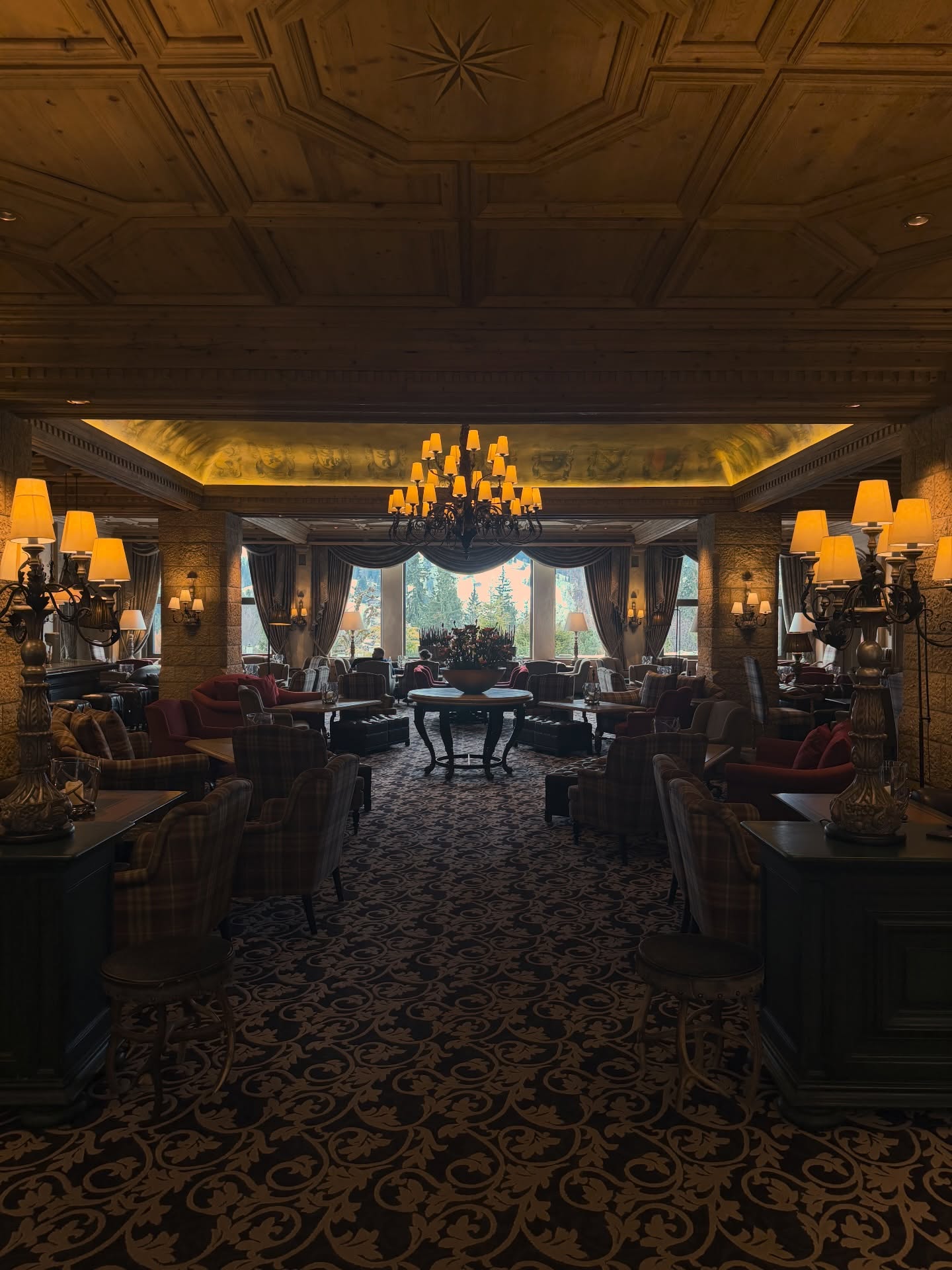
Where else can you sip a $50,000 bottle of wine on a balcony of your $5,500 Deluxe Suite with Mountain View at one of the world's most beautiful hotels - The Gstaad Palace overlooking the whole 3000 residents town while discussing how much taxes they avoided to be here? (laughter)
Thus I asked provocatively three different people:
“What exactly do you do here every day?”
And, the answer was as expected: “Sports and nature. And that’s about it.”
Skiing, spa mornings, long lunches, bio hacking sessions, then wine tasting on sunlit terraces - it's all a performance of leisure, of having made it.
But I must admit: low-key and quiet. Unlike anywhere I have seen so far. They really made it.
FINANCE BROS
And yet, there’s a lighter side. Finance bros are everywhere. You know the type: same career path, same blazer, same laugh, even holding their drink in the same hand.
You could line them up like a stock photo, and you’d think: Are these people clones?
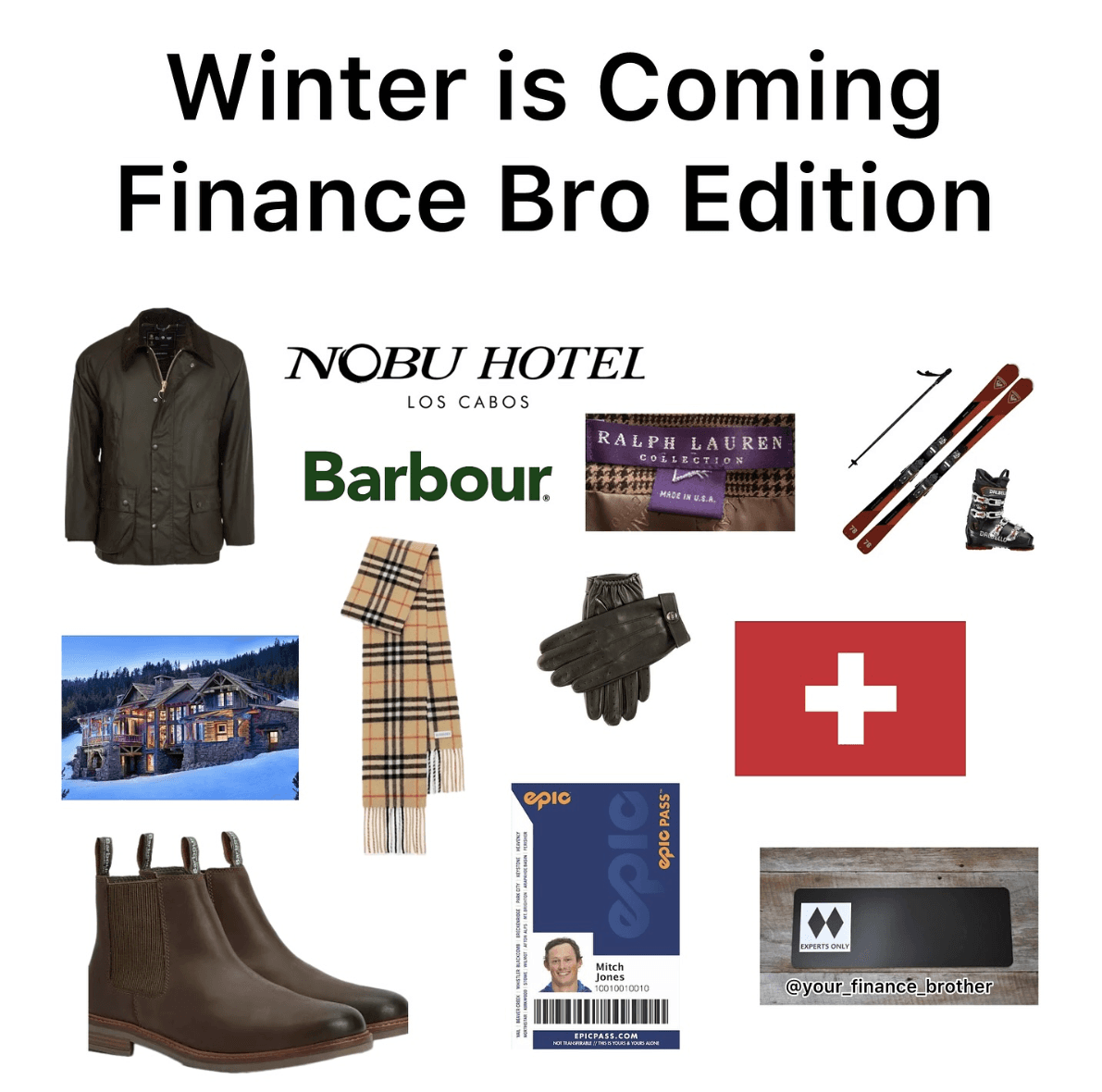
The Finance Bros is a pack of capitalist beasts who came the same way, to do the same stuff, following financial trends. But are trendy people a reliable way of investing?
They have a rhythm, a look, a network that’s both impressive and, frankly, a little comical.
I have a theory they move in a pack not out of lack of intelligence, but because conformity is often rational. Being wrong alone ends careers. Being wrong together is just a market cycle.
Just like in the Finance Bros classical movie: Big Short.
Naturally, I had to ask about stocks. What’s hot? What’s moving? What’s really working in today’s global market?
“S&P 500.”
That’s it. No nuanced advice, no insider tips, just the same ticker repeated in a room of multimillionaires and their consigliere, like a secret handshake.
Then and Now: Wealth, Taxes, and Generational Legacies
Two things: Descreet and creativity. Wealth accumulation often means hiding assets, sidestepping taxes, and carefully orchestrating legacies.
Think about it. Why do we have families, and why do we say that “who you marry is the best financial decision you’ll ever make”? This is exactly why. Family funds, foundations = finance. All f-s.
Today, while privacy is still paramount, wealth management has evolved. Structures in Switzerland are more transparent, digital tools track investments with precision, and intergenerational planning involves careful coordination with global tax codes. But the goal remains the same: protect, grow, and pass on wealth.
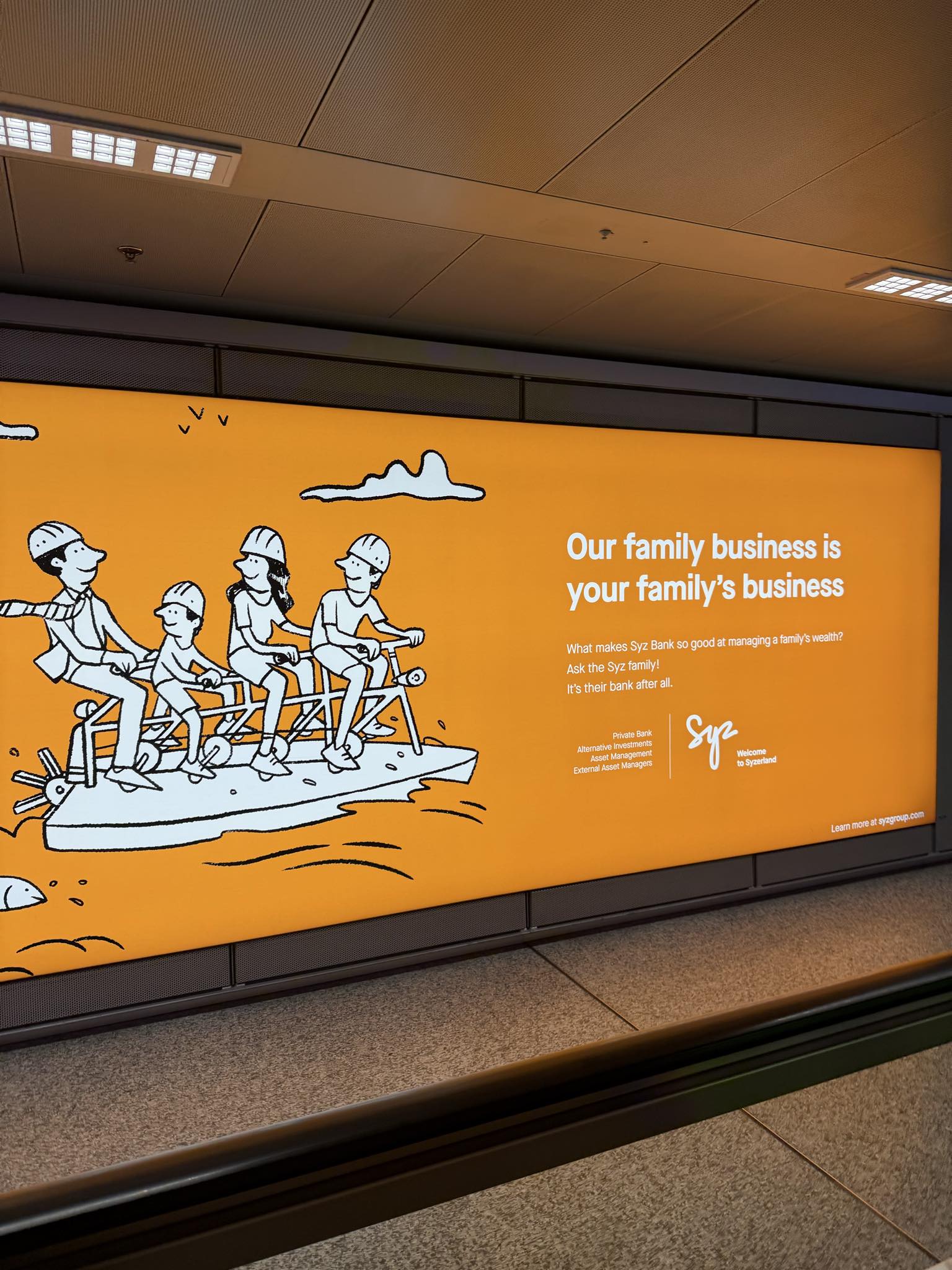
For those with “old money,” it’s about heritage and stability.
For the newly rich, it’s about status and influence. My personal favorite goes under the nickname: Gstaad Guy.
Here are some of the craziest CEO's "wish lists" I heard about during my stay:
A private ski lift,
An on-demand tax lawyer,
Fresh snowfall on demand.
Still, even the freshest couples here argue - not about money, but about attention. Too much for business partners, not enough for each other. It seems mixing romance and work is one luxury money can’t buy (experienced it at the exit of the remarkable Zuma restaurant).
The Bottom Line
Gstaad isn’t just a ski resort. It’s a living, breathing ecosystem for wealth. Its remoteness, exclusivity, and highest quality service make it irresistibly attractive to the world’s wealthiest.
It has however became slightly more accessible over the years where you can stay for an affordable price at the Sporthotel Victoria, for example, and visit Gstaad Palace lobby in the evening, Cappuccino cafe for breakfast, or La Ferme Saint-Amour chalet restaurant & club for a weekend fun.
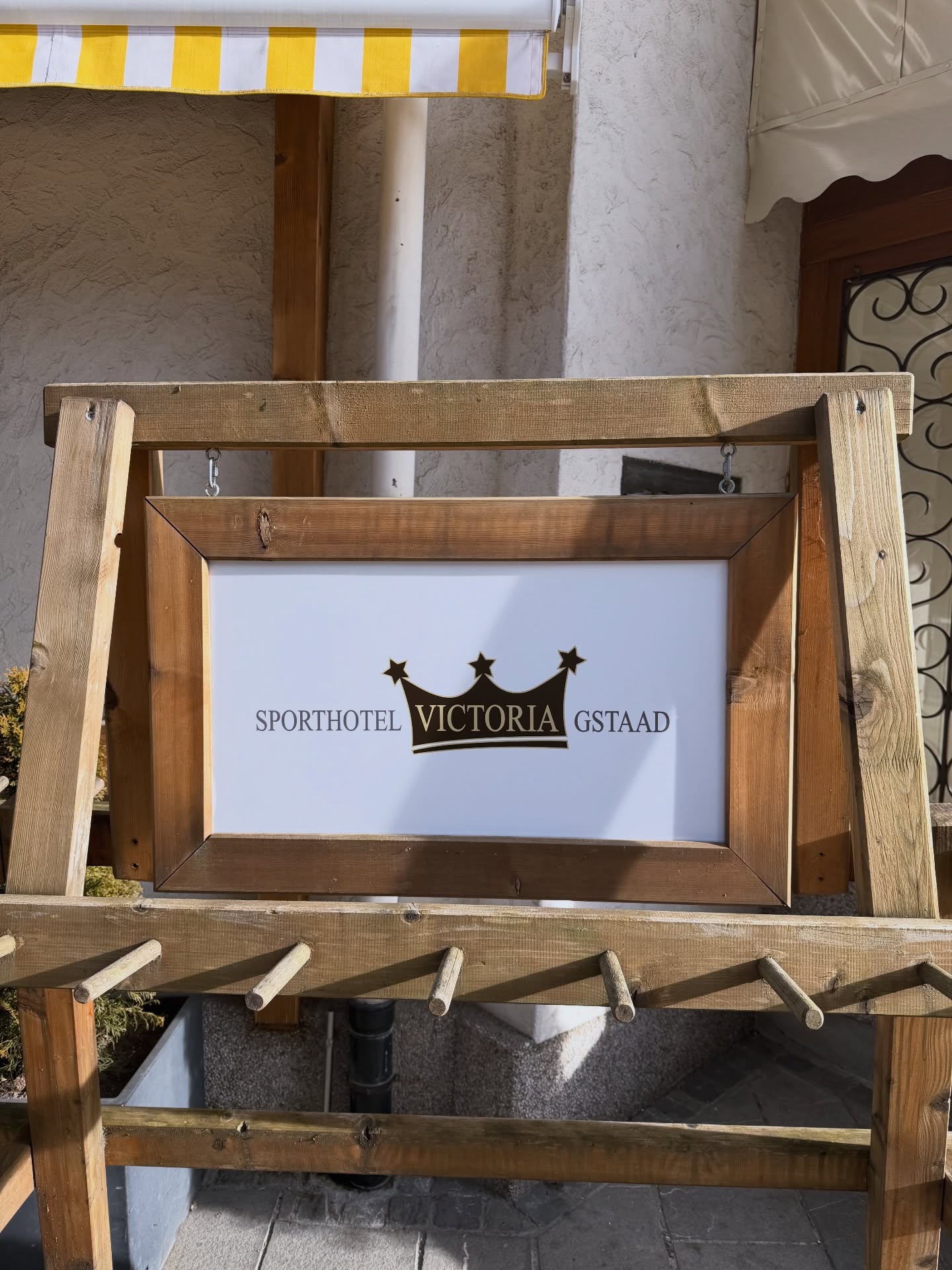
Even though the highest mountain is roughly 1000 m, this is the top of the world.
All economic cultures confronted Vis a Vis.
And as Mark Carney, Prime Minister of Canada reminded us at the World Economic Forum in Davos this year:
“If you are not at the table, you are on the menu.”