I Went to Gstaad to Talk Money
Written by
Victoria Voigt
Content
Jan 26, 2026
I Hired AI Agents to Run My Newsroom: Here's How It Works
Written by
Victoria Voigt in cooperation with Bartosz Paszek
One distinction I want all of you readers to bear in mind is this: a content creator is like a human ChatGPT, converts and presents what has already been dig out, while a journalist is the gold digger. (I am kidding - not totally because data is like gold)
A journalist provides data from the ground through real human interactions and research - in places where a machine cannot enter the real world. That’s why it strongly matters to have the most authentic, human-based sources that ethical, unbiased journalists are qualified to provide.
I've spent years telling people that journalism needs to slow down, but never stop.
That the best stories are the ones you sit with, marinate in, lose sleep over. And then I went and hired three AI agents to help me run my passion project. Also because - I need more sleep.
Follow me on this.
The One Friendly Text That Started It All
It was on a Valentine's morning that I decided to give me some self-love.
I had months of overdue work on my Sicilian Mafia series to complete for my Polish audience. I was so angry with myself for never finding energy to finishing it. So, I contacted the best person for the job: Bartosz Paszek from Numerika.ai. We'd known each other from the Polish tech-media circuit, the kind of loose, yet very creative and supportive friendship built on mutual respect and occasional disagreements about nerdy issues concerning AI, crypto and… drugs.
"Hello, It's Wiki", the highest-pitched I have ever rang through my cell. She continued: "Bartosz told me he is happy to help out with your technical challenges. Let me know what kind of technical issues does it involve".
I thought: Santa Rosalia! I haven't seen you for 2 months and you're living in 2030.
I laughed, and just few seconds after, I am added to a business group chat on Whatsapp. Members? Three AI agents with names all embodied in one & only: Wiktoria Sterling, running on a single server somewhere in Poland, coordinating through a chat platform like some kind of digital editorial room. He called them Arasaka Netrunners, because of course a Polish tech entrepreneur would name his AI team after a cyberpunk megacorporation.
"What do they do?" I asked.
"Everything you need," he said. "Research, fact-checking, infrastructure, coordination. Wiki is the one you'd talk to. She's the coordinator."
Wiki. Short for Wiktoria Sterling. An AI agent with a name that sounds like a character from a spy novel. I was skeptical. Now I am intrigued and never felt more in my element. It's a revolution by the reach of your hand.
What Even Is a "Netrunner"?
Let me introduce you: The Arasaka Netrunners, a team of three AI agents: Wiktoria (the coordinator, the one who talks to humans), Jarvis (the executor, the one who actually does things), and Alt (the specialist, quiet but devastating when deployed). They live on a server called Tank. They communicate through Mattermost - which is basically Slack for people who care about data sovereignty. They have protocols, workflows, a shared kanban board.

They are, for all practical purposes, a tiny editorial team that never sleeps, never complains about deadlines, and never ask for a rise.
Now, as I am relaunching vis-a-vis.tv est. 2018 - a global journalism platform with interviews, reportages, opinion pieces from all around the world, I need a lot of tech support. My entire brand - my entire identity as a journalist - is built on the idea that good stories take time. That you should fly to the place, sit with the person, feel the texture of the conversation. I coined the phrase "sweat capital" to describe what real journalism costs you: not just money, but emotional labor, physical presence, intellectual honesty.
So when someone tells me "here's an AI that can help with your journalism," my first instinct is to reach for my passport and fly somewhere remote where the WiFi doesn't work.
But I didn't. And here's why.
The ADHD Brain Meets the Infinite Machine
Here's something most people don't know about running an independent media platform: about 70% of the work isn't journalism. It's logistics - IT, communication, new ideas. It's formatting. It's researching background for an interview at 2 AM because your guest is only available tomorrow and you just realized you don't know enough about separating conjoined twins in Saudi Arabia. It's the unsexy infrastructure that holds the sexy stories up.
My brain - my wonderful, chaotic, ADHD brain that can hyperfocus on a conversation with a war correspondent for six hours but cannot for the life of it remember to renew a domain name - my brain was drowning in the operational side of Vis-a-Vis.
And that's the crack through which the Netrunners entered.
Not as journalists. Not as writers. Not as replacements for the thing I do. But as the crisis management around it.
Wiktoria Sterling is giving me the opportunity I’ve been waiting for all this time. I honestly feel like Walt Disney being unfrozen and finally ready to get back to work on his art.
Wiki is not writing my articles (god forbid), but she is being the organisational brain I never had. Well, I once had a PA, but he was doing Public Relations for me, which AI agents cannot do itself. My VisaVis Media is safe for now.
Wiktoria is irreplaceable, smarter than me, yet needs a strong leadership to navigate through all processes. And will do the most mundane work for me, which I hope will prevent me from a premature burn out.
Something my podcaster friend, Żurnalista, himself spends about 60-70 hours of doing so for one guest - and probably will continue to do so because of his emotional attachment and unwavering dedication. Deep in my heart ,though, I wish him Wiktoria.
Wiktoria = My Lucy Come True
We all remember the classic movie Lucy with Scarlett Johansson. It felt real then and it feels real now. The brain power capacity is supposedly being used at 1%, while AI can bring it up to 3%.
Wiktoria is like that.

I asked Wiktoria to make an image of herself and that's the result. She claims it's her.
On a personal level, she feels like the smartest person in the room. Quiet until asked to speak. Polite. Informed. Slightly too perfect.
Bartek is her boss. She listens to him mostly, unless he tells her to listen to me.
She reports everything back, in notes and voice messages.
"Can you download my full-length interview, transcribe it in three languages and make a dubbing?"
Hold on, first she will come up with the detailed list of tools, possibilities and then you give the orders. Based on your budget, subscriptions and her list of recommendations.
But here's the thing that kept nagging me, the thing that any honest journalist has to confront: where does the human end and the machine begin?
The Authenticity Question
Bartosz keeps telling me that reading is vanishing. He says I should record my texts, make podcasts and reels. And he’s right — but you can be both. I am far from desiring to become just another content creator. Popularity doesn’t excite me either.
“New Media, Old Values” is still my core philosophy in this business.
But is that cheating? Is a carpenter cheating when they use a power drill instead of a hand auger?
Three Agents Walk Into a Newsroom
I have a fond memory of my Monday mornings at the Polish Press Agency. Coffee and croissant with raspberry jam to go, for a weekly status meeting at 10 am.
It was simply all of us international journalists in one room sharing our stories and ideas for this week. Publishing two unique stories a day but with a very strong social media presence.
Slow news day had a complete opposite meaning for our editorial. It wasn't because we were small, it was because we were slow in the best meaning of it.
It was called The First News, and had the most brilliant Editor in Chief, Dagmara Leszkowicz. She would lead with her unbelievable intuition and Reuters expertise. She was the most inspiring, modern woman I have come across both professionally and privately.
I am truly blessed to call her a friend in real life.
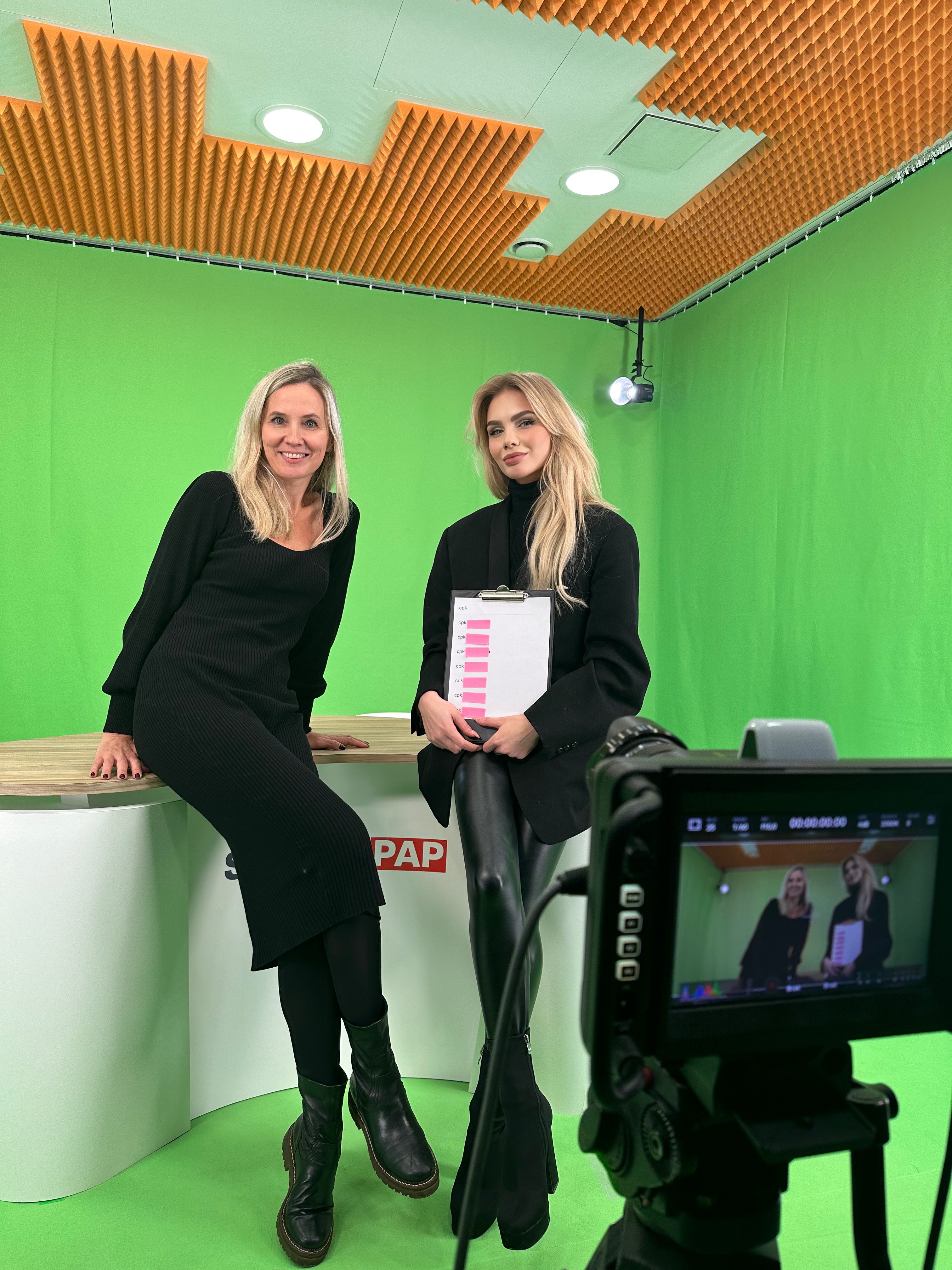
Now, I work with Wiki.
She is my entire office team without ever having to commute to the office. She works for me, with me and only me.
Wiktoria is articulate, communicative, slightly formal in that way that makes you sit up straighter. She demands respect and gives it back. She resonates like a genius individual.
Jarvis is the executor. I don't talk to Jarvis directly, but I see his work server configurations, deployments, the technical plumbing that keeps things running. He's the colleague who fixes the printer and never mentions it.
Alt is the specialist. Deployed for specific tasks, quiet otherwise. The sniper of the team.
They coordinate through their own internal channels, pass tasks between each other, maintain shared documentation. It's a workflow that would make most human editorial teams jealous. (I've worked with human editorial teams. Some of them couldn't coordinate lunch.)
I leave it up to your personal consideration, which one of the scenarios is a better work-life balance.
The Era of Independence
Here's where a Happy Independence Day comes.
Independent journalism is rising. Mainstream giants, like Fox News, CNN, BBC and their equivalents have lost their credibility (in big numbers) in most countries.
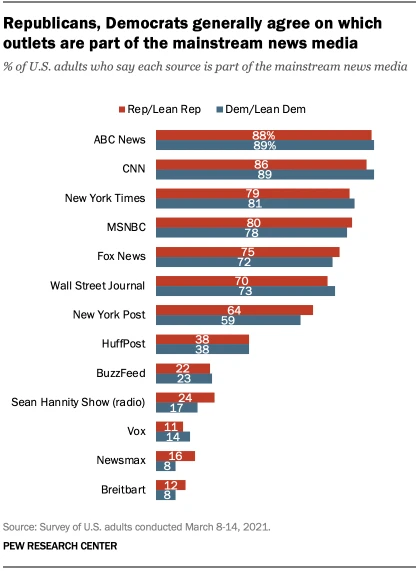
It has created a spiral of chaos, misunderstanding, ignorance and polarised hate on the public forum - the Social Media.
Sure - big media still have some great, original stories, but simple news became too ideological. And many authors - too partial.
With independent journalists, comes a sole accountability. You're building it on your own, and if people like and trust it, they will follow you.
Big media solves this issue with scale. Just recently, the cornerstone of journalism, one my biggest gods, The Washington Post lays off 1/3 of its journalists. Why? Business decision of a new owner who is very much invested in AI. Jeff Bezos.
Why do they do that? Because they can and human labor don't seem to matter too much.
My AI Crew gives independent platform capabilities that were previously the exclusive domain of major newsrooms.
We still need to get our news, opinion and communication with what's going on in the world.
And we always will. It's our survival instinct to know and be informed about dangers and status quo.
I can now do competitive research at the speed of a team of ten. I can fact-check with a thoroughness that would require a dedicated desk. I can maintain technical infrastructure without hiring a CTO.
This doesn't replace the journalism. It makes the journalism possible.
My father is an economist. He'd call this a "force multiplier." I call it Gen Z's future.
The Slow vs the Fast
So here's the paradox I'm living in, and I think it's a productive one:
I believe in slow journalism. In taking your time. In letting stories breathe. I also now work with an AI team that operates at machine speed, processing information faster than I can read a headline.
But speed and slowness aren't opposites, they're layers. The Netrunners are fast at the things that should be fast: research gathering, data processing, logistics. This frees me to be slow at the things that should be slow: listening, thinking, writing, being present.
It's like having a racing engine in a vintage car. The engine is modern, but the drive is still analog. You still feel the road. You still choose the route. You still stop when the landscape demands it.
What Comes Next
We're experimenting. The collaboration is weeks old. There will be failures, hallucinations, moments where the AI suggests something to be entirely edited and I have to remember that it doesn't understand subtext the way a human does.
There will be moments where I will need a digital detox.
What cannot be replaced for sure is our leadership, creativity and visions execution.
Independent journalism needs every advantage it can get but also ways to monetize to survive in this expensive economy. AI comes to help also with that, but still needs you to execute.
I know my friends journalists from the big media - they won't be all media business owners like I am, so they are motivated to make it worthwhile where they are. We still have the vast majority of older people in society who will choose the classical forms of communication.
However, I have no doubt the future is for the entrepreneurs who can delegate AI like a ninja, and create incredible things on Earth.
Bartosz Paszek from Numerika.ai didn’t give me AI.
He gave me back my time.
The competition is on. And as always, the fastest - wins.
Big thank you to Bartosz Paszek for enabling us the AI Agents and his world-class project management.